
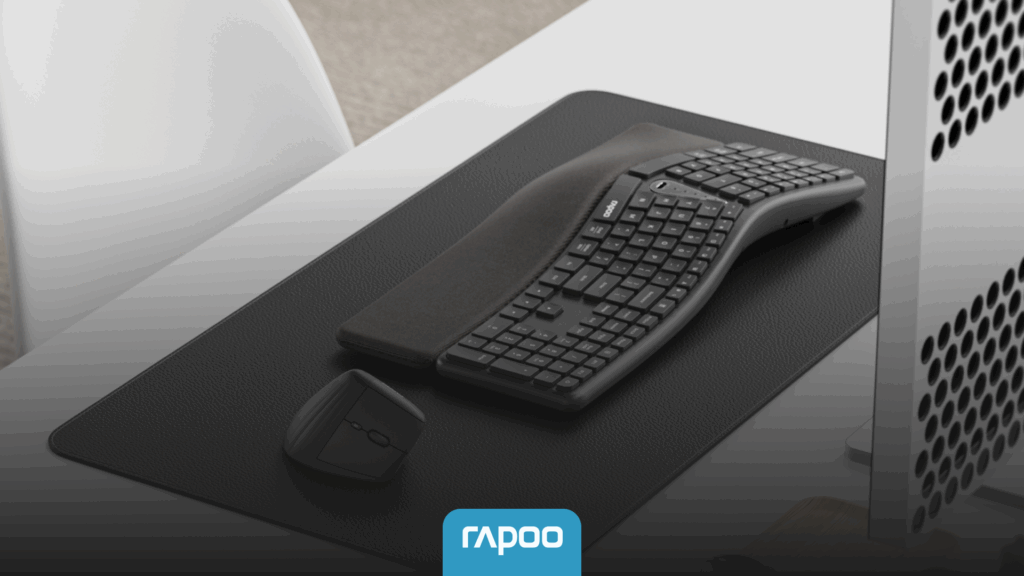
In an age where computing is increasingly distributed, intelligent, and personalised, peripherals are transforming from simple tools to intelligent, connected experience amplifiers. As studies from IEEE (2025) and Springer (2025) suggest, the peripheral industry is undergoing a paradigm shift — with wireless integration, sustainability, versatile design, AI augmentation, and ecosystem coherence leading the charge.
Part 1: From Tools to Touchpoints: Peripherals as Experience Amplifiers

The way we interact with technology is no longer tethered to one device, or even one purpose. As work and play increasingly blur, the modern peripheral is evolving into a multi-device, context-aware interface, connecting users seamlessly across screens, platforms, and environments.
In 2025, IDC reported that 62% of enterprise users now expect keyboards, mice, and headsets to function fluidly across their work and personal devices, while Taylor & Francis researchers (Ahuett-Garza et al., 2025) emphasised the role of “cognitive ergonomics”, peripherals adapting to the mental state and tasks of users for reduced fatigue and increased flow.
This shift is redefining the expectations of what a keyboard or mouse should be: portable, intelligent, and ecosystem aware.
1.1 The Cross-Platform Imperative
The rise of remote work, content creation, and hybrid collaboration has made cross-platform compatibility a baseline requirement.
- Windows/macOS/iOS/Android/Linux must all be supported interchangeably.
- Devices should be able to remember settings across systems, or switch contexts based on app or task.
- “Follow-me” device behaviour — like mouse movement across monitors, or keyboard shortcuts adjusting per application — is already being implemented by brands like Logitech and Microsoft.
1.1b Gaming Everywhere: A Multi-Device World
Cross-platform expectations are not limited to productivity. In gaming, players increasingly divide their time across multiple devices. Research shows that 79% of global gamers play on mobile, 42% also play on PC, and 55% on consoles. Around 72% of gamers now engage across two or more platforms. In the United States, the figure is 61%.
This pattern extends beyond active play into spectatorship. Esports viewership has surged, with audiences often beginning on their phones and then switching to larger screens at home.
Cloud gaming further reinforces this trend. The global user base is projected to reach 455 million by 2025, up from 295 million in 2023. While cloud gaming revenues remain under 5% of the overall industry, its growth is fuelled by better connectivity and subscription models.
When peripherals carry settings across devices, keeping DPI profiles, lighting preferences, and macros consistent, they become anchors of continuity in an otherwise fragmented digital life.
Products like the multi-mode V700DIY keyboards and VT-series mice are designed to deliver this continuity. By connecting across multiple platforms and supporting cloud-based play, Rapoo helps players maintain consistent control and responsiveness across every screen they use.
1.2 What Rapoo Is Doing
At Rapoo, we’re actively building a multi-mode, multi-platform future for peripherals:
- Multi-Device Connectivity: Rapoo’s advanced mice (e.g., MT760L, R600S) and keyboards support Bluetooth 3.0, 5.0 , and 2.4GHz dongle modes, allowing users to connect to three different devices simultaneously and switch between them with a button press.
- Profile Memory and Intelligent Switching: Our peripherals are equipped with onboard memory that stores DPI settings, macros, and user preferences across devices, ideal for users who move between home and office setups or personal and professional workflows.
- OS-Agnostic Driverless Setup: Many Rapoo models require no software drivers, making them ideal for plug-and-play in dynamic environments (from Chromebooks to Android tablets to Linux workstations).
1.3 Why This Matters in Africa and Emerging Markets
For professionals and students across Africa, where device switching is common (e.g., phone + tablet + laptop), Rapoo’s multi-device, multi-mode support ensures maximum utility without extra costs.
It enables:
- Learning and working from shared or borrowed devices
- Gaming and productivity on the same hardware
- Cross-platform performance without relying on expensive software ecosystems
1.3a Gaming in Emerging Markets
In emerging markets, mobile remains the most accessible entry point into gaming. Studies show that mobile accounts for 46% of playtime, with PC and console making up about 40% depending on the country. These figures highlight the importance of multi-device support where dedicated consoles are less common.
At the same time, regions such as MENA and South Africa are experiencing growth in local esports competitions and streaming hubs. Gamers often use the same laptops and smartphones for both education and entertainment, creating demand for peripherals that are affordable, durable, and flexible enough to support this hybrid use.
By offering multi-device peripherals at accessible prices, Rapoo enables players in these markets to enjoy responsive performance on shared or versatile hardware. This strengthens Rapoo’s position as a brand that supports both productivity and play in environments where resources are often stretched across multiple roles.
1.4 Where We See the Industry Heading
The next phase of peripheral innovation will be defined not by platform support alone, but by how seamlessly devices can integrate into dynamic, hybrid digital lives. We see a future where peripherals transcend the role of accessories and become cognitive extensions of the user — automatically adapting to context, device, and intent. This means deeper firmware intelligence that stores preferences locally, enabling frictionless switching between platforms without the need for reconfiguration. It also means context-aware inputs that intuitively adjust to work, creativity, or gaming scenarios — offering tailored macros, control schemes, and sensory feedback based on application use.
At Rapoo, we believe this convergence of intelligence, fluidity, and platform agnosticism is particularly vital in emerging markets like Africa, where users often operate across multiple devices and operating systems — not as a luxury, but as a necessity. The devices of tomorrow must not only work everywhere but understand the nuances of how people work. That’s why we’re building toward an ecosystem where cross-platform is the minimum — and cognitive, human-first interaction is the goal.
At Rapoo, we believe peripherals should adapt to users, not the other way around.
This is the future of peripheral interaction: flexible, intelligent, and human-first.
1.5 Innovation Spotlight: M+ Wireless Cross-Screen Technology
In late 2023, Rapoo introduced the M+ Wireless Cross-Screen System — a major leap forward in multi-device usability. Building on its 2.4GHz multi-mode wireless tech, this system enables file movement across screens and devices in local LAN mode with virtually zero lag.
Highlights include:
- Seamless Device Switching: Supports up to 6 connected devices, enabling one-click file transfer between multiple PCs, tablets, or smartphones.
- Professional Use Cases: Ideal for content creators, web developers, and multitaskers working across devices and file formats.
- Bluetooth Alternative: Eliminates the frustrations of slow or unstable Bluetooth file sharing.
- Speed + Convenience: Transfers are smooth, reliable, and feel native to the workflow — no cloud storage, no flash drives, no fuss.
This innovation reflects Rapoo’s user-first R&D ethos: make peripherals smarter, faster, and more intuitive — not by adding complexity, but by removing it.
🔗 Read more: Revolutionizing Productivity with M+ Wireless
Part 2: The Rise of AI and Smart Peripherals

The future of peripherals is intelligent. As edge computing matures, the potential for peripherals to learn, adapt, and personalise themselves in real-time is no longer a theory. It’s literally on the horizon, and it’s rising quickly.
While many of the most exciting features — gesture learning, adaptive sensitivity, voice-based macros — are still in R&D or tethered to host-side software, the building blocks are already here.
2.1 The Industry is Getting Smarter — AI at the Edge
Artificial Intelligence is no longer confined to the cloud — it’s coming to the very edges of computing. Across the peripheral industry, AI is beginning to power smarter, more responsive user experiences at the device level.
According to IEEE and ACM technical briefings (2023–2024):
- Peripheral AI is most advanced in sensor tuning and macro automation, particularly in gaming mice and keyboards.
- Cloud-based user profiles are increasingly common — seen in platforms like Logitech G Hub and Razer Synapse — enabling users to sync preferences across devices.
- True on-device AI for peripherals is still emerging, particularly in AR/VR, assistive tech, and wearables. Full adoption is projected between 2025 and 2027.
In 2025, the next shift became clear: AI is being embedded directly into peripherals.
- IEEE TechRxiv (2025) outlines how edge AI enables local learning for improved gaming and productivity, reducing reliance on host-side processing (Wiese et al., 2025).
- Galactica Media (2025) highlights the rise of AI-driven game controllers and biofeedback-enabled peripherals, ushering in more immersive and responsive experiences.
This evolving landscape sets the stage for brands to lead not only in hardware, but in intelligent, adaptive interaction.
2.2 What Rapoo Is Doing
2.2b AI-Driven Immersion
AI is redefining how peripherals interact in gaming contexts. Recent research highlights how AI-powered gaming peripherals are being developed to adapt in real time, from adjusting sensitivity in shooters to predictive macros for complex combos. Edge computing has also enabled gesture recognition on peripherals, with studies showing efficient recognition of hand and finger movement directly on edge devices, including VR and gaming applications. Other researchers have proposed neural-network based gesture systems designed specifically for gaming contexts.
These capabilities signal a shift toward peripherals that anticipate player needs instead of merely responding. By placing AI at the edge, peripherals become adaptive, immersive extensions of gameplay.
Rapoo’s investment in OTA firmware infrastructure positions the brand to integrate these features as they mature. As voice macros, adaptive DPI, and even biofeedback-driven adjustments become mainstream, Rapoo can deliver them via firmware updates, extending product life and relevance.
At Rapoo, we’re building the foundation for it today. Our edge-focused innovation strategy includes:
- OTA Firmware Infrastructure: We’ve invested heavily in Over-the-Air update systems, ensuring that future AI-driven features — like smart DPI switching, contextual macros, and user pattern learning — can be added without replacing hardware.
- Voice AI Integration: We are actively researching voice-command functionality that integrates with assistants like Google Assistant and Windows Copilot — laying the groundwork for hands-free workflows.
- Local AI Readiness: Rapoo firmware is being designed to support on-device inference, reducing latency and enabling responsive AI without always needing an internet connection.
AI and DPI: Learning to Adapt
The term DPI (dots per inch) is often misunderstood. Higher isn’t always better — true performance lies in adaptability.
- Our educational resources (e.g., Rapoo’s DPI explainer blog) help users understand how DPI ties into control, precision, and workflow.
- Devices like the Rapoo MT760L Multi-Mode Wireless Mouse support on-the-fly DPI switching, allowing seamless transitions between tasks — from editing to gaming.
- While this is currently manual, our goal is firmware-based adaptive DPI — where the mouse intelligently senses task context and adjusts sensitivity accordingly.
Smart Firmware Foundation
Products like the MT760L already reflect our smart design ethos, with:
- DPI presets for multi-tasking
- Memory-stored user profiles
- Seamless multi-device switching via Bluetooth and 2.4GHz dongles
These capabilities are more than conveniences — they’re cornerstones for AI-ready peripherals that will:
- Learn task preferences over time
- Adapt button mappings based on application context
- Offer macro suggestions based on usage patterns
2.3 Where We See the Industry Heading
As artificial intelligence shifts from the cloud to the edge, the future of peripherals lies in true contextual awareness — devices that not only respond but anticipate. At Rapoo, we envision a near-term evolution where peripherals move from reactive tools to intuitive co-pilots in daily workflows. This means peripherals that learn from your behaviour, adapt to your environment, and optimise performance in real time, all while respecting privacy and reducing dependency on host systems.
The path ahead is clear: firmware must become the brain behind the device, enabling local AI features like gesture recognition, adaptive DPI, and app-specific macro suggestions. We’re preparing for a world where a mouse doesn’t just click — it knows whether you’re editing video, gaming, or presenting, and adjusts accordingly. Just as importantly, we see this intelligence being delivered via OTA updates to extend hardware lifespans, reduce e-waste, and continuously upgrade user experience — especially critical in bandwidth-conscious regions like Africa.
This AI-powered shift isn’t about replacing user control — it’s about augmenting it. It’s about peripherals that grow with you. As we build for that future, Rapoo’s commitment is to ensure that smart functionality isn’t locked behind premium paywalls or elite ecosystems, but made accessible, localised, and purpose-built for real users across global and emerging markets alike.
2.4 Ecosystem Thinking: HarmonyOS + Rapoo Smart Office Collaboration
At Huawei Developer Conference 2024, Rapoo was announced as an official HarmonyOS ecosystem partner — marking a pivotal moment in smart office evolution. This partnership signifies the merger of Rapoo’s hardware innovation with Huawei’s Harmony NEXT operating system.
Key takeaways:
- All-Scenario Smart Office Integration: Rapoo devices are now optimized for Harmony OS — allowing seamless, cross-scenario connectivity across phones, tablets, PCs, and IoT endpoints.
- Multi-Mode Intelligence: Devices like the MT760 mouse debuted in Harmony NEXT’s showcase area, reflecting Rapoo’s full compatibility with new mobile-first workflows.
- Fluid UX Design: The partnership improves both interface consistency and hardware compatibility across professional and lifestyle use cases — from enterprise workstations to smart home setups.
This alliance positions Rapoo at the heart of an interconnected productivity ecosystem, amplifying the impact of its peripherals beyond hardware — into intelligent environments.
🔗 Read more: Rapoo and Huawei Unite for Harmony OS Smart Office Solutions
At Rapoo, we focus on engineering intelligent functionality rooted in how people actually use devices.
Our goal is simple: hardware that is designed for you and that adapts to you – not the other way around.
Part 3: Sustainability is Non-Negotiable
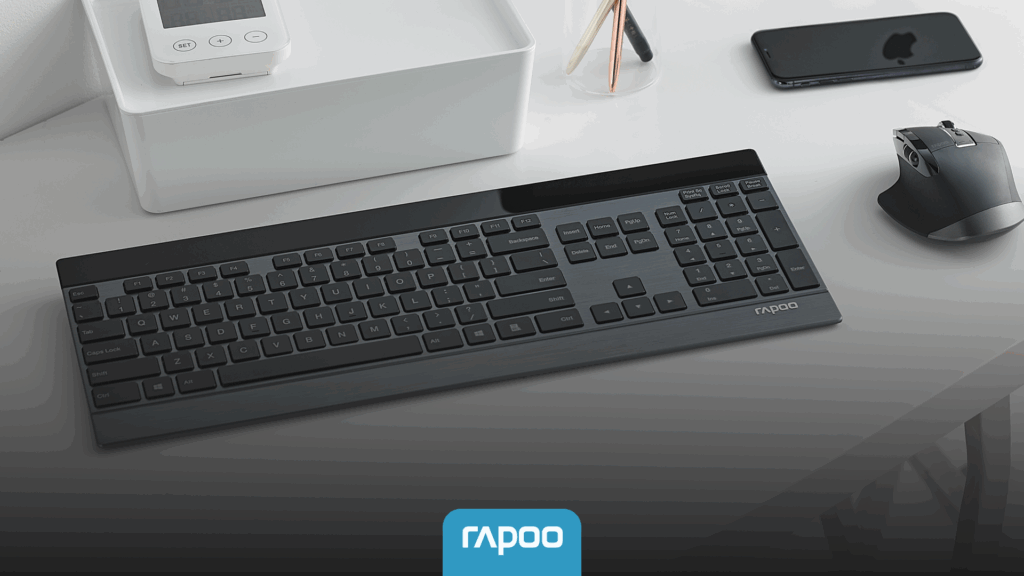
The conversation around sustainability in tech has evolved. What was once a differentiator is now a baseline expectation — especially among younger, environmentally conscious consumers. A 2024 Statista report confirms this shift: over 70% of Gen Z and Millennial users rank sustainability among their top purchase criteria for electronics.
At Rapoo, we hear this loud and clear.
While the industry’s largest players — Apple, Dell, Logitech — are paving new roads with carbon-neutral certifications and recycled materials, Rapoo is building a sustainability path that’s practical, embedded in innovation, and inclusive across markets like Africa.
3.1 What We’re Doing at Rapoo
We may not yet have a formal ESG report, but we’re already building the infrastructure for greener innovation across the product lifecycle:
- Energy-Efficient Engineering: Our flagship 4K and 8K wireless mice are powered by next-gen Realtek chipsets, which reduce energy draw while supporting industry-leading performance. That means longer battery life, fewer charges, and lower environmental impact over time.
- OTA Firmware to Reduce E-Waste: Rapoo devices feature over-the-air firmware updates — ensuring peripherals stay up to date without needing replacement. Fewer upgrades mean less landfill and longer product lifespans.
- Compact, Minimal Packaging: We’ve optimized packaging for efficiency and sustainability, cutting unnecessary plastics and reducing shipping footprint — a small change with a global ripple effect.
3.2 Where We See the Industry Heading
Sustainability is no longer a niche concern — it’s a core expectation. At Rapoo, we see the future of peripherals not just as faster or smarter, but as more responsible. As users become more conscious of their environmental impact, especially in Gen Z and millennial demographics, the demand is shifting toward technology that balances performance with purpose.
In this emerging landscape, sustainability must be built into the blueprint — not just bolted on. This means moving toward recyclable materials and modular construction that allow for easier repairs, upgrades, and responsible disposal. It also calls for radical transparency, where users can scan a product’s packaging and instantly access its environmental footprint, from carbon emissions to recyclability.
We believe long-term sustainability will also be measured by longevity. OTA-enabled devices that stay relevant through software updates instead of hardware turnover are essential to reducing e-waste — particularly in regions like Africa, where replacement cycles can be economically and logistically challenging. Closed-loop recycling systems, trade-in incentives, and local repairability are not just aspirations — they are strategic imperatives.
For Rapoo, building greener tech isn’t about checking boxes. It’s about designing with foresight, creating durable value, and aligning innovation with environmental accountability. This is the sustainability future we’re engineering — and one we believe all technology must evolve toward.
3.2a Gaming and the Green Imperative
Sustainability has become a key consideration even within gaming communities. Reports show that 91% of Gen Z consumers prefer to buy from sustainable companies, and 77% are willing to pay more for sustainable products. Similarly, studies show that 35% of global consumers now check the sustainability of electronics before purchasing.
In esports, sustainability is also a growing theme. Arenas and organisers are experimenting with recyclable infrastructure and energy-efficient lighting to reduce carbon impact, positioning eco-friendly technology as an industry standard.
Rapoo’s VT-series mice, which offer 500 hours of battery life, and its OTA update system that reduces hardware turnover, align with these consumer expectations. By positioning firmware updates and efficient hardware not just as features but as sustainability practices, Rapoo can resonate with environmentally conscious gamers.
Part 4: Wireless is Winning — But Latency is Still King
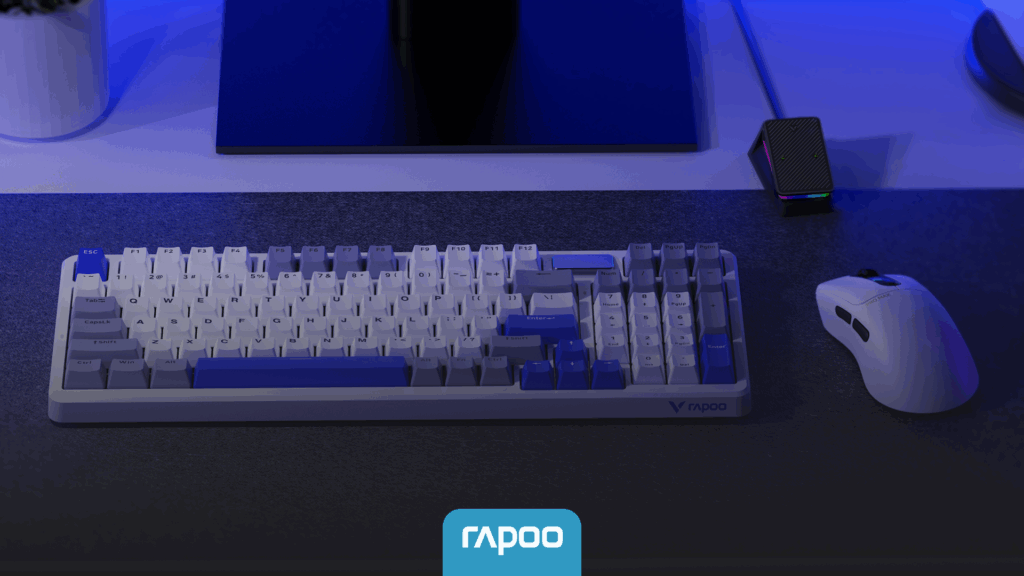
Wireless peripherals have shifted from niche convenience to default expectation — but for gamers, creators, and professionals, the bar is no longer just about being untethered. Ultra-low latency, intelligent power efficiency, and firmware-controlled performance now define leadership.
4.1 Where the Industry Stands in 2025
According to Verma et al. (Springer, 2025), the industry’s shift to Bluetooth 5.4 and next-gen 2.4GHz RF technologies has enabled wireless peripherals to finally break into latency-sensitive applications like esports, live editing, and precision 3D design.
Hardware leaders like Logitech, Razer, and ASUS now offer 1000Hz wireless polling as standard in their gaming lines — but this is no longer enough.
Meanwhile, a 2024 IDC survey found that 72% of peripheral users prefer wireless, but cite lag, interference, and poor battery performance as the top concerns preventing full adoption for competitive and professional use.
4.2 What Rapoo Is Doing
4.2.1 Rapoo’s 4K Wireless Breakthrough
In 2024, Rapoo redefined the wireless frontier with its 4K Wireless Esports Gaming Technology, delivering a 4000Hz polling rate that slashes input latency to just 0.25 milliseconds — 4x faster than the traditional wireless standard of 1000Hz.
Key innovations include:
- Realtek chip integration for advanced signal processing and interference shielding.
- Custom polling rate scaling from 125Hz to 4000Hz, allowing tailored performance per game or task.
- Built for eSports-grade responsiveness, especially in high-speed FPS and MOBA titles.
4.2.2 A World First: 8K Wireless Gaming Technology (Teaser)
In late 2024, Rapoo announced the world’s first OTA 8K wireless peripheral technology, achieving a staggering 8000Hz polling rate (0.125ms latency) — a level of precision unmatched by any wireless competitor.
According to Rapoo’s official firmware release, the leap was enabled by:
- 📡 Over-the-Air (OTA) firmware upgrades for real-time performance updates and customization.
- 🛠️ Custom features like:
- Move Sync & Ripple Correction
- Asymmetric button delay tuning
- Sleep-state performance optimization
4.2.3 Battery Life: The Silent Dealbreaker
While speed captures headlines, battery life remains the top practical concern for real-world users.
A 2024 Statista global survey confirmed that 68% of gamers prioritize battery longevity when choosing wireless gear — particularly streamers, travelers, and competitive players who demand stability over long sessions.
Rapoo’s response:
- Adaptive polling and power states reduce energy draw when idle, but ramp up during intensive use.
- OTA-controlled energy optimization, adjusting firmware to real-world user behavior.
- Up to 80 hours of high-performance use on a single charge with Rapoo’s 4K series — no compromise on polling rate.
Battery life is no longer a hardware challenge — it’s a firmware frontier, and Rapoo’s OTA system ensures continual improvement without replacing the device.
4.3 Where We See the Industry Heading
The wireless frontier is no longer defined by simply cutting the cord — it’s about matching or exceeding wired performance while unlocking new possibilities for mobility, longevity, and adaptability. At Rapoo, we see the next phase of wireless evolution as one driven by precision engineering and intelligent firmware, not just faster specs on paper.
True wireless leadership will be measured in microseconds — with peripherals capable of ultra-low latency, seamless polling rate scaling, and dynamic energy efficiency. We believe that 4000Hz to 8000Hz polling rates will become the new gold standard in esports and professional-grade devices, but only if supported by robust architecture and OTA firmware that adapts to real-world usage, not lab benchmarks.
Battery life, once a limiting factor, is transforming into a strength — thanks to smarter sleep states, adaptive polling, and user-informed firmware that optimises energy use without sacrificing speed. This is especially crucial for content creators, competitive gamers, and mobile professionals who can’t afford mid-session drop-offs.
Looking ahead, we anticipate wireless peripherals evolving into updatable platforms. With OTA systems like Rapoo’s, peripherals can gain new capabilities over time — whether it’s performance tweaks, energy improvements, or user-personalised configurations. We see firmware as the new frontier of innovation, enabling peripherals to stay relevant long after purchase.
And as we expand in emerging markets like Africa, stability and efficiency matter just as much as speed. That’s why Rapoo Africa is piloting low-bandwidth-friendly OTA firmware updates, ensuring that even in variable infrastructure environments, users can experience world-class wireless performance without compromise.
For Rapoo, the wireless future isn’t just about outpacing wired performance — it’s about delivering reliability, intelligence, and adaptability that users can trust across continents and use cases..
4.3a Streaming, Cloud Gaming and Latency
Streaming platforms have shown how sensitive audiences are to latency. Studies found that streams with delays longer than a few seconds experience significantly higher abandonment rates. For competitive gaming, low-latency interactions are critical for perceived authenticity and fairness, especially in multiplayer experiences.
Platforms like Twitch have designed their infrastructure specifically to support near real-time interaction, noting that higher latency disrupts chat engagement and audience retention.
With its 8 kHz wireless polling delivering 0.125 ms latency, Rapoo’s peripherals are ideally positioned to support streamers and cloud gamers. For creators whose revenue depends on smooth, interactive streaming, and for competitive gamers where microseconds determine outcomes, Rapoo ensures consistent and responsive performance.
4.4 Firmware Frontier: Wireless 8K Gaming Goes OTA
In December 2024, Rapoo officially pushed the first Over-the-Air upgrade to enable 8K wireless polling — a world-first. Delivered to its flagship 4K+8K gaming mouse lineup, this update revolutionizes gaming input latency and user customization.
🔧 What’s New in 8K Wireless via OTA:
- 125μs latency — slashing delay to 0.125ms wirelessly.
- Polling Rate Range: Users can toggle between 125Hz and 8000Hz, tailoring responsiveness to play style.
- Realtek Chip Integration: Ensures low interference, microsecond input fidelity, and real-time signal optimization.
⚙️ OTA-Enabled Customizations:
- Move Sync and Straight Line Correction for snappier aim.
- Asymmetric Anti-Bounce Delay: Customize click/release delay per button.
- Sleep State & Power Tuning: User-defined sleep durations to conserve battery without sacrificing readiness.
This shows how firmware has become Rapoo’s innovation engine. Rather than pushing users to replace hardware for performance gains, Rapoo is making peripherals upgradeable, smarter, and more adaptive through software — especially powerful in regions like Africa, where longevity and connectivity matter deeply.
🔗 Read more: Firmware Upgrade — OTA Wireless 8K Technology
Part 5: Design is Identity
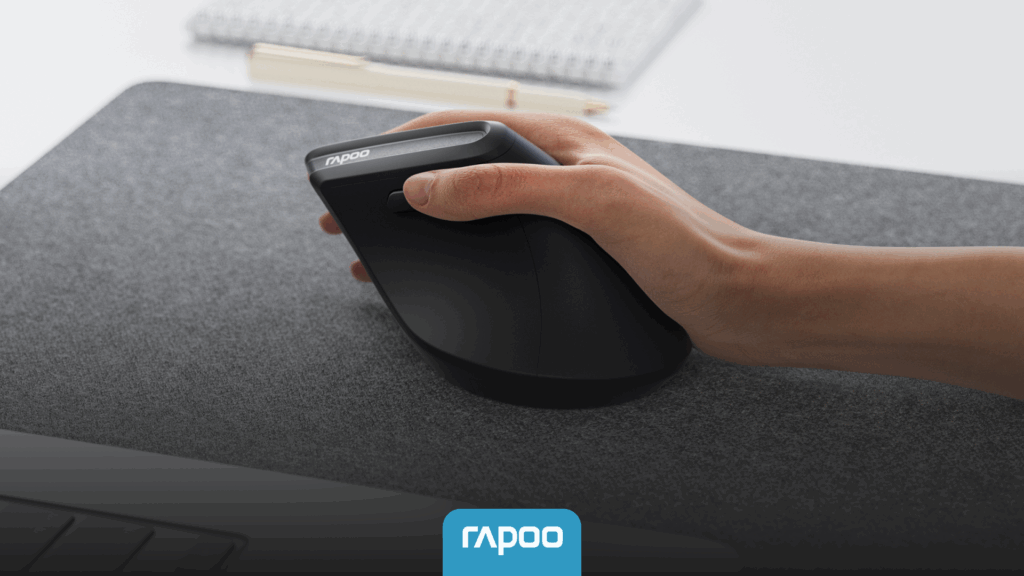
Today’s peripherals must look good, feel right, and perform flawlessly across hours of use. With the rise of desk aesthetics and personal branding (especially among gamers, streamers, and hybrid workers), design has emerged as a critical differentiator. But design isn’t just about color palettes — it’s about precision engineering for human use.
5.1 Recent Findings:
- A 2025 study published in Analecta Technica Szegedinensia found that comfort-driven design — including grip compatibility and weight balance — significantly increases user retention and satisfaction (Simon et al., 2025).
- The same study found that peripherals with customizable RGB lighting, detachable parts, and theme skins significantly boosted retention among Gen-Z buyers, who value personalization and uniqueness.
- Galactica Media Journal (2025) notes the growing influence of desk-set influencers and WFH décor trends, driving a surge in “lifestyle peripherals” — accessories that match furniture aesthetics or convey personal style.
5.2 Design Attributes That Matter Most:
1. Shape and Ergonomics
- Right-handed vs Ambidextrous: Users demand tailored shapes. Right-handed ergonomic designs (e.g., Logitech MX Master, Razer DeathAdder) remain dominant, but ambidextrous models are preferred by mixed-handed users and in office environments.
- Size Variants: Small, medium, and XL versions are increasingly demanded — not just for hand size, but for use-case (e.g., compact mice for travel, large for gaming).
- Companies like Razer and Cooler Master now produce multiple shell sizes within the same product family to cater to this ergonomic segmentation.
2. Grip Style Customization
There are three dominant mouse grip styles, and each demands unique design features:
- Fingertip grip: Prefers lightweight and short-length mice for agile movement.
- Claw grip: Requires arched backs and extended support zones.
- Palm grip: Needs longer bodies with full-hand support for maximum comfort.
Brands like Finalmouse and Glorious have introduced shell kits that can be interchanged based on grip preferences — a trend expected to grow.
3. Lightweight Construction Without Compromise
- Materials such as honeycomb polymers, magnesium alloy, and high-grade ABS plastics have made sub-70g mice the new benchmark — without sacrificing structural integrity.
- Users expect premium tactile feedback from switches and scroll wheels even in featherweight devices.
4. Surface Texture and Grip
- Customizable side grips (rubberized, matte, glossy) are now standard in high-end models.
- Texture affects sweat resistance, precision, and durability, especially in hot climates or under long sessions.
5. Sound and Click Feedback
- In quiet office setups, silent switches are preferred, while in gaming or editing environments, tactile and audible feedback enhances confidence.
- Adjustable actuation force is emerging as a differentiator in both keyboards and mice.
5.3 Aesthetics as Experience
The market for customisation and modding continues to grow as well. Research into the mechanical keyboard market shows demand driven heavily by switch customisation, hot-swappable layouts, and personalised designs.
In a visually driven culture of streaming and content creation, peripheral aesthetics are brand statements.
- The rise of social platforms and livestreaming has elevated the desk setup into a status symbol. Users now seek peripherals that complement their digital persona.
- Brands such as Logitech G and ASUS ROG have already begun collaborating with creators to launch influencer-designed editions, where color schemes, keycaps, and even textures are co-developed.
- AR and digital twins are enabling virtual try-before-you-buy experiences, especially important for products with physical interaction like mice and headsets.
5.3a Streaming Culture and Personal Branding
Streaming has made peripherals central to personal branding. Reports show that 68% of streamers use RGB-customisable peripherals to align with their branding or match on-screen visuals.
With products like the V700DIY series, which include hot-swappable switches and per-key RGB lighting, Rapoo is positioned to serve both the aesthetic and functional demands of creators. This flexibility makes Rapoo gear part of a streamer’s on-screen identity, not just a utility.[TO10]
5.4 What Rapoo Is Doing
Rapoo is not just responding to design trends — it’s leading them. Our commitment to form meeting function has been internationally recognized:
- Rapoo MT760L – Red Dot Award Winner 2023: Recognized for its multi-device capability, sculpted ergonomic shape, and seamless blend of productivity and aesthetic minimalism. This wireless mouse exemplifies the intersection of comfort, performance, and premium design.
🔗 Red Dot MT760L - Rapoo VT9 – Red Dot Award Winner 2023: Built for esports, the VT9 features ultra-lightweight construction, structural integrity without flex, and a finely tuned shape for claw and fingertip grips. Its design balances competitive needs and visual appeal, winning it accolades for both performance and aesthetics.
🔗 Red Dot VT9 - Colour and Material Exploration: Rapoo continues to invest in texture innovations, customizable surface finishes, and RGB personalization — offering both minimalist and expressive aesthetics across its product lines.
These awards validate Rapoo’s design-first philosophy: that peripherals should not only perform flawlessly but also fit naturally into personal workspaces and lifestyles.
5.4 Where We See the Industry Heading
Design has become more than just an aesthetic layer — it’s a strategic pillar in how users choose and experience peripherals. At Rapoo, we see the future of peripheral design as a convergence of personal identity, ergonomic science, and contextual adaptability. Users no longer separate function from form. They expect a product to perform at elite levels while reflecting their personality, matching their workspace, and supporting their physical preferences over extended sessions.
This shift demands a new design philosophy: one that’s as empathetic as it is innovative. We anticipate a continued move toward modularity — where users can choose not only the look and feel of a device, but also its shape, grip, and even click feedback. We’re also seeing the rise of “lifestyle peripherals” — devices that blend seamlessly into both gaming and productivity setups, complementing decor, mood, and daily rituals.
At Rapoo, we’ve already seen this design vision validated through international accolades such as the Red Dot Awards for both the MT760L and VT9 — devices engineered for very different audiences, but unified by a commitment to excellence in both form and function. Our work in customizable finishes, multi-size ergonomics, and smart surface materials continues to push this vision forward.
Looking ahead, design will increasingly intersect with technology: AR-enabled visualisation tools, try-before-you-buy digital twins, and AI-powered configuration assistants will empower users to co-create their peripherals. Rapoo’s roadmap is already evolving to support these experiences — because we don’t just design for performance, we design for people.
In a world where a desk setup is part personal brand and part productivity engine, we believe design is no longer a detail — it’s the differentiator.
Rapoo is proving that good design can be seen AND felt.
Part 6: Global Reach, Local Relevance
Tech trends travel fast — but user expectations remain deeply local. Successful peripheral brands understand that what delights a creator in Seoul may frustrate a student in Nairobi.
Regional preferences for switches, layouts, noise profiles, durability, and even packaging vary widely — and adapting to these micro-demands is what separates global manufacturers from globally relevant brands.
6.1 Where the Industry Stands
6.1a Regional Gaming Cultures
Gaming preferences differ dramatically by region. In South Korea, mechanical keyboards dominate with over 72% of the gaming keyboard market share in 2024. In Brazil, PC cafés remain a key part of gaming culture, creating demand for rugged, budget-friendly peripherals. In Africa, gaming remains primarily mobile-first, but there is rising demand for low-latency devices as esports infrastructure develops.
Rapoo can adapt offerings per region: ultralight 49 g VT-series mice in mobile-heavy markets, mechanical switch keyboards in PC-centric regions. This localisation strengthens Rapoo’s competitive relevance.
A synthesis of insights from StatCounter, IDC, Canalys, and localized retail intelligence shows:
- Korea & Germany: Mechanical keyboards dominate, driven by gaming culture, PC DIY heritage, and a preference for tactile feedback. In Germany, Cherry MX remains a gold standard, while Korean consumers often customize layouts and switches, supporting a booming enthusiast modding scene.
- Southeast Asia & MENA: Membrane keyboards remain dominant due to affordability, quiet operation, and compact size — ideal for mobile-first and shared home-office environments. Peripheral purchases spike around Ramadan and back-to-school seasons, with brands focusing on bundle affordability and reliability.
- Japan: Prioritizes silent, high-durability peripherals, influenced by dense office environments and strong cultural norms around noise minimization and longevity. Top-selling devices often feature advanced silence switches and compact layouts like 60% and 75% keyboard formats.
- Brazil & Latin America: Users demand rugged, budget-flexible peripherals with local language layouts, anti-dust durability, and extended warranties. Installment-based purchases via mobile commerce dominate, requiring brands to offer flexible payment terms and local after-sales support.
- India: A growing preference for multi-device peripherals that seamlessly switch between phones, tablets, and laptops. Driven by remote education and productivity needs, Indian users favour Bluetooth + 2.4GHz combo devices with long battery life and low maintenance requirements.
- Middle East & North Africa (MENA): Seasonal spikes around Ramadan and academic calendar periods define retail cycles. Arabic layout keyboards and dual-language packaging (English + Arabic) are crucial. There’s also a growing demand for gaming peripherals among youth, especially during regional esports tournaments.
- South Africa: One of Rapoo’s fastest-growing markets. Statista (2024) and IDC retail data highlight a strong preference for multi-device peripherals among hybrid workers and students. Devices that support Bluetooth and 2.4GHz switching are particularly valued. Key trends include:
- Mobile-first functionality: Many users operate from tablets or smartphones alongside PCs.
- Durability and repairability: Products with long lifecycles and local repair options gain traction.
- French/English/Afrikaans keyboard layouts: Language diversity influences product design.
- E-commerce growth via platforms like Takealot and Jumia has driven demand for mid-range peripherals with warranty support and local language user guides.
- United States: The U.S. market continues to split between high-performance and lifestyle-driven segments. IDC and Canalys data show:
- Ergonomics and personalization lead user priorities — especially among hybrid workers and creators. Hot-swappable switches, RGB customization, and wrist support are common requirements.
- Gaming Peripherals: A premium segment driven by esports, Twitch streaming, and professional play — favouring ultra-low latency, AI-enhanced macros, and 4K+ polling rates.
- Work-from-home peripherals: Quiet switches, wireless multi-device input, and Zoom-friendly audio setups define product design in home office gear.
- Sustainability is rising in importance — especially among Millennials and Gen Z — with increased demand for peripherals made of recycled materials and equipped with firmware updateability to reduce e-waste.
In a world where user preferences are shaped as much by culture, language, and infrastructure as by specs and aesthetics, global peripheral success hinges on deeply localized relevance. From Brazil’s installment-driven purchases to South Africa’s mobile-first hybrid needs, and from Japan’s silence-first ergonomics to the U.S.’s ergonomic-meets-lifestyle demand — each market reveals a unique interaction between people and peripherals. Brands that recognize this diversity and respond with precision will earn both loyalty and longevity. For Rapoo, this isn’t just a marketing insight — it’s an engineering mandate. That’s why we’ve embedded regional intelligence into every layer of our development and go-to-market strategy.
6.2 What Rapoo Is Doing
Rapoo is one of the few global peripheral brands that actively localizes without compromise, recognizing that meaningful growth comes from meeting regional users on their terms.
- Multiple Key Layouts & Language Packs: Rapoo offers a variety of keyboard layouts, including Arabic, Cyrillic, QWERTZ, and AZERTY, ensuring usability across Europe, MENA, and CIS regions.
- Localized Multi-Mode Mice & Keyboards: Devices like the Rapoo MT760L and 8000M keyboard support multi-device, multi-OS switching — ideal for hybrid professionals in India, South Africa, and UAE who juggle phones, tablets, and desktops.
- Region-Specific Packaging & Retail Programs: Rapoo Africa and Asia-Pacific teams collaborate with local distributors to tailor packaging (e.g., French + Arabic manuals), meet import specs, and support cash-based or mobile money retail systems.
- Culturally Aligned Campaigns: Recent launches in Nigeria and Kenya were tied to back-to-school and productivity bundles, while Ramadan and Black Friday activations have been highly effective in the GCC.
- Local Creator Engagement: Rapoo works with regional tech influencers, such as YouTubers in India, Philippines, and South Africa, to review and demo products in vernacular languages, building real credibility.
By co-developing with our regional teams and leveraging direct feedback from diverse user communities, we ensure that every product launch, marketing effort, and packaging decision reflects local realities. This approach has enabled us to scale globally while staying deeply rooted in the cultures we serve. As we continue to evolve, this commitment to relevance, inclusivity, and cultural nuance will remain our north star.
6.3 Where We See the Industry Heading
As global access to technology expands, we believe the future of peripherals depends on how well brands translate universal performance into local relevance. At Rapoo, we see the next frontier not just in innovation — but in localisation that is nuanced, responsive, and deeply attuned to cultural contexts.
Peripheral design and functionality must now be region-aware. This means embracing language diversity through alternative keyboard layouts, acknowledging different retail infrastructures through flexible payment models, and aligning campaign calendars with seasonal moments that matter — whether that’s Ramadan in the GCC, back-to-school in Kenya, or holiday promotions in Brazil.
The days of one-size-fits-all tech are over. Users expect peripherals that speak their language, match their work habits, and reflect their values — all without compromise on quality or innovation. For us, that means collaborating closely with local content creators, educators, and tech communities to ensure that our products are not only accessible, but also aspirational.
As Rapoo Africa, we play a strategic role in this journey — acting as both conduit and creator. We don’t just bring products into the continent; we adapt them, advocate for the needs of African users within Rapoo Global, and co-create solutions with local insight. It’s this loop — between global R&D and regional relevance — that we believe will define the next generation of successful tech brands.
To us, designing locally isn’t a logistical decision — it’s a leadership philosophy. The more precisely we adapt, the more deeply we connect. And in today’s world, connection is everything.
Part 7: What It Means for Rapoo — and Rapoo Africa

As a brand with proven wireless leadership, award-winning design, and fast-growing global footprint, Rapoo is positioned to shape the future of peripheral innovation — but not by focusing solely on specs. The opportunity lies in understanding how people live, work, learn, and play across different regions, and building technology that adapts to their rhythms.
7.1 Global Strategy: Where Rapoo Is Headed
7.1b Building a Gaming Ecosystem
Esports partnerships highlight how peripheral brands integrate into communities. In early 2025, French esports organisation 3DMAX announced SteelSeries as its official peripherals partner, using player feedback to co-develop gear and build audience trust. Reports show that sponsorships and partnerships remain one of the fastest-growing revenue sources in esports.
Implications for Rapoo Africa: By engaging with local esports teams, offering beta-testing programs, and developing firmware-sharing platforms, Rapoo can establish itself not just as a hardware provider but as a trusted ecosystem partner. Partnerships with African esports leagues and schools would strengthen grassroots adoption and position Rapoo as both accessible and aspirational.
Our roadmap for the next frontier includes:
- Lead the Intelligent Wireless Revolution: Rapoo’s 4K and upcoming 8K platforms — paired with OTA firmware evolution — are setting new standards in responsiveness, energy optimization, and AI readiness.
- Redefine Sustainability in Emerging Markets: By focusing on energy-efficient firmware, recyclable packaging, and long-lifecycle components, Rapoo is looking to create greener devices that are practical and affordable in high-growth regions.
- Champion Experience-Driven Design: Red Dot-winning products like the MT760L and VT9 reflect our philosophy: peripherals should be precise, comfortable, and expressive — seamlessly blending function and form.
- Engineer Cross-Platform Ecosystems: From Linux to Android, from macOS to ChromeOS — Rapoo ensures that users in hybrid, mobile-first environments experience the same smooth functionality as enterprise power users.
- Build Smart Peripherals that Learn You: Rapoo’s firmware-first AI approach — with contextual DPI switching and app-aware macros on the horizon — puts learning at the edge, not in the cloud.
7.2 Rapoo Africa: Amplifying Global Vision with Local Execution
Across Nigeria, Kenya, Ghana, South Africa, and beyond, we are embedding Rapoo’s global innovation in contextualised, culture-aware, and purpose-built strategies for the continent.
Here’s how Rapoo Africa is activating the future locally:
- Local Innovation Deployment
- First in the World to launch OTA 8K wireless peripherals — beginning with Rapoo Africa.
- Piloting low-infrastructure firmware updates, ensuring top-tier gaming performance even in bandwidth-limited environments.
- Context-Driven Product Fit
- Supporting multi-device hybrid users (laptop + phone + tablet) through devices like the MT760L and 8000M, with intelligent input switching.
- Offering French-Arabic-English layouts and regional software presets, directly addressing linguistic and UX diversity.
- Culturally-Timed Launches
- Designing campaigns around Ramadan, Back-to-School, Black Friday, and youth gaming tournaments — making peripherals relevant to the rhythms of African life.
- Community-Led Awareness
- Partnering with vernacular tech YouTubers, content creators, and streamers to localise content and elevate product literacy.
- Supporting education-focused bundles to address digital learning gaps with accessible, durable tech.
The Future We’re Building at Rapoo
We don’t just see peripherals as hardware. We see them as:
• Nodes in intelligent ecosystems
• Platforms for personalisation and AI interaction
• Vehicles for sustainable, affordable performance
• Local-first tools in a global world
Whether it’s a creator editing on the move, a student toggling between devices, or a gamer demanding millisecond-level precision — Rapoo is building peripherals that think and grow with you, not just react to you. They are designed for you.
And we don’t outsource innovation — we build it.
Rapoo is one of the rare brands in the global peripherals industry to own and operate its entire R&D and manufacturing value chain. With a dedicated research team of 120+ engineers, we’re constantly pioneering advances like the 5 GHz wireless standard, high-efficiency chipsets, and OTA-enabled firmware intelligence.
Our fully operational factory, launched in 2012, houses advanced robotic assembly lines and is aligned with sustainable production principles — reducing waste while enabling precision engineering at scale. This vertical integration ensures not only faster innovation cycles and superior quality control, but also market-responsive agility — critical when adapting products for regional use cases across Africa, Asia, Europe, and beyond.
Our design studio works in close coordination with marketing and production teams, resulting in award-winning products like the MT760L and VT9, recognized by the Red Dot Design Awards for their user-first ergonomics and aesthetic excellence.
This internal synergy — between R&D, manufacturing, and user insight — allows Rapoo to build not just devices, but experiences.
This is the Rapoo vision.
This is the Rapoo Africa execution.
This is the future of peripherals.
The Takeaways
In 2025 and beyond, peripherals are no longer passive accessories — they are intelligent, responsive, and deeply personal nodes within a user’s digital ecosystem. As this article has shown, the global peripheral industry is undergoing a rapid evolution across seven key domains: intelligent design, wireless performance, sustainability, AI integration, contextual localisation, ecosystem interoperability, and user-first innovation.
Rapoo stands not just as a participant in this shift, but as a pioneer. From our groundbreaking 4K and 8K wireless technologies, to Red Dot Award-winning ergonomic designs, to our firmware-first sustainability approach and regionalised product execution in markets like South Africa, India, and the GCC — we are redefining what a peripheral brand can be.
Rapoo Africa extends this global vision through local activation: adapting innovations to context, translating tech into real-world value, and amplifying user voices from across the continent.
Together, we are not just building better devices — we are building a smarter, more inclusive future of interaction.
Connect With Us
Rapoo Africa is shaping the future of smart peripherals across the continent. Whether you’re a business, distributor, educator, or content creator—our team is ready to collaborate.
👉 Let’s talk: info@rapoo.africa | Follow us on LinkedIn @RapooAfrica
🔗 Learn more: www.rapoo.africa
References
- Ahuett-Garza, H., & Vazquez-Nava, A. (2025). Smart Manufacturing Interfaces. Taylor & Francis.
- IEEE TechRxiv (2025). Edge AI for Peripherals and Embedded Systems. IEEE.
- Verma, P., O’Shea, D., Newe, T., et al. (2025). Wireless Standards in Industry 4.0. Springer.
- Wiese, L., Rathinam, S. S., & Oschinski, M. (2025). AI Ethics and Governance in the Job Market: Trends, Skills, and Sectoral Demand. IEEE.
- Simon, J., Gogolák, L., & Čović, Z. (2025). Trends in AR Peripherals. Analecta Technica Szegedinensia.
- Lenkevich, A. S., & Latypova, A. R. (2025). Gaming Peripheral Interfaces. Galactica Media.
- Statista Research Department. (2024). Sustainable Electronics Market Trends.
- Sekti, B. A., Laksono, M. N. G., & Laksono, M. I. A. (2025). Principles of Green Computing. IGI Global.
- Ji, X., Li, X., & Yang, S. (2025). Digital Twin Integration for Peripherals. ScienceDirect.
- Rapoo (2024). What is DPI in a Mouse?. https://rapoo.in/blog/what-is-dpi-in-mouse/
- Red Dot Design Award – MT760L. https://www.red-dot.org/project/mt760-65412
- Red Dot Design Award – VT9. https://www.red-dot.org/project/vt9-65416
- IDC (2025). Global Peripherals Report: Hybrid Work and AI Trends.
- Rapoo (2024). 4K Wireless Esports Gaming Technology. https://rapoo.in/news/wireless-speed-upgrade-everything-about-the-latest-4k-wireless-esports-gaming-technology/
- Rapoo (2024). OTA Firmware Upgrade & 8K Technology. https://www.rapoo.com/firmware-upgrade-ota-wireless-8k-technology/
- StatCounter, Canalys (2024–2025). Regional Peripheral Preferences Data.
- SQ Magazine. Gen Z Gaming Platform Preferences Statistics (2025). https://sqmagazine.co.uk/gen-z-gaming-platform-preferences-statistics
- SQ Magazine. Cross-Platform Gaming Statistics (2025). https://sqmagazine.co.uk/crossplatform-gaming-statistics
- GamesBeat. 61% of U.S. Gamers Play Across Multiple Devices (2024). https://gamesbeat.com/its-a-cross-platform-world-61-of-u-s-gamers-play-across-multiple-devices-cta-survey
- Appinio. US Gaming Industry and Esports Report (2024). https://www.appinio.com/en/blog/insights/us-gaming-industry-esports
- Market.us. Cloud Gaming Statistics (2024). https://scoop.market.us/cloud-gaming-statistics
- Udonis. Gaming Industry Report 2024. https://www.blog.udonis.co/mobile-marketing/mobile-games/gaming-industry
- YouGov. Console vs Mobile Gaming: Global Trends (2024). https://business.yougov.com/content/48108-console-vs-mobile-gaming-understanding-trends-across-18-markets
- HP Tech Takes. AI Gaming Peripherals: The Future of Competitive Gaming (2025). https://www.hp.com/us-en/shop/tech-takes/ai-gaming-peripherals-future
- MDPI Sensors. Hand Gesture Recognition on Edge Devices (2025). https://www.mdpi.com/1424-8220/25/6/1687
- ResearchGate. Gaming Using Different Hand Gestures with Artificial Neural Networks (2025). https://www.researchgate.net/publication/378378685_Gaming_using_different_hand_gestures_using_artificial_neural_network
- PDI Technologies. Gen Z Consumer Trends in Sustainability (2024). https://pditechnologies.com/blog/tracking-gen-z-consumer-trends-sustainability
- GWI. Sustainability and E-Waste Report (2022). https://www.gwi.com/blog/sustainability-2022-e-waste
- Esports Sustainability Initiative. Sustainability in Esports (2024). https://www.esportssustainability.org
- Dacast. Ultra-Low Latency Video Streaming (2025). https://www.dacast.com/blog/ultra-low-latency-video-streaming
- Wowza. Why Low Latency Matters in Online Gaming (2024). https://www.wowza.com/blog/low-latency-matters-in-online-gaming
- FrugalTesting. Twitch vs YouTube Live Streaming Performance (2024). https://www.frugaltesting.com/blog/peak-load-analysis-twitch-vs-youtube-live-streaming-performance
- Streamlabs. Q3 2024 Live Streaming Report (2024). https://streamlabs.com/content-hub/post/streamlabs-and-stream-hatched-q3-2024-live-streaming-report
- Coherent Market Insights. Mechanical Keyboard Market (2024). https://www.coherentmarketinsights.com/market-insight/mechanical-keyboard-market-1888
- Grand View Research. Gaming Keyboard Market in South Korea (2024). https://www.grandviewresearch.com/horizon/outlook/gaming-keyboard-market/south-korea
- Canalys. LATAM Gaming Report (2024). https://canalys.com
- EsportsRadar. 3DMAX Announces SteelSeries as Peripherals Partner (2025). https://esportsradar.gg/3dmax-announces-steelseries-as-official-peripherals-partner
- 38.Esports Charts. Esports Partnerships and Sponsorships Q1 2025 (2025). https://escharts.com/news/esports-gaming-partnerships-sponsorships-q1- 2025